

Supply the sand: sand nourishment
What it does: adds sand directly to the beach system to restore beach width and buffers.
This can be done through a range of coastal management methods:
- Rainbowing / bottom dumping from offshore dredging provides sand to nearby beaches.
- The Surfers Paradise Backpass System (SPBPS) pumps sand from The Spit to Surfers Paradise.
- Dune management supports healthy vegetation and provides a natural buffer against coastal erosion.
Nourishment could occur on a cycle, such as every 5 or 10 years, depending on need. This is a well established coastal management method used worldwide.
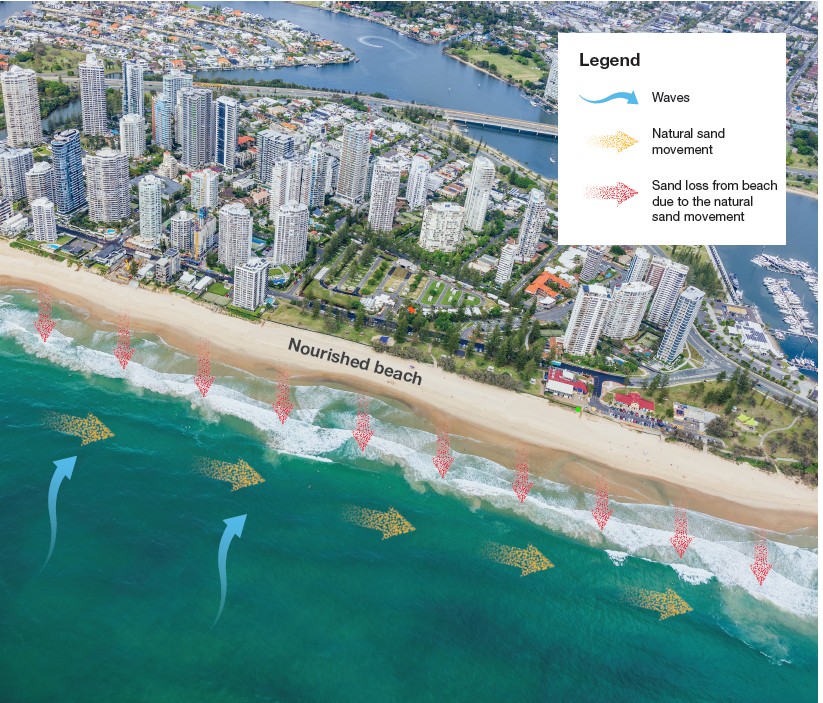
What are the benefits of this approach?
- Bringing in sand widens the beach and improves access and amenity.
- There's minimal disruption to the community during the placement process.
- It's a well understood approach that is relatively simple to implement.
- No permanent structures need to be built, meaning no long-term physical footprint (aside from the existing SPSBP infrastructure).
What are the disadvantages?
- How long the benefit lasts depends on future wave conditions.
- Nourished sand is lost over time, as it naturally moves north.
- Nourishment is likely to become more expensive and more challenging to source the sand.
- This approach requires ongoing nourishment to maintain beach width.
- The SPSBP may not provide enough sand on its own, nor may it always be reliable.
Consultation has concluded.
