

Slow the sand: artificial reef
What it does: uses underwater structures to reduce wave energy and slow sand movement offshore.
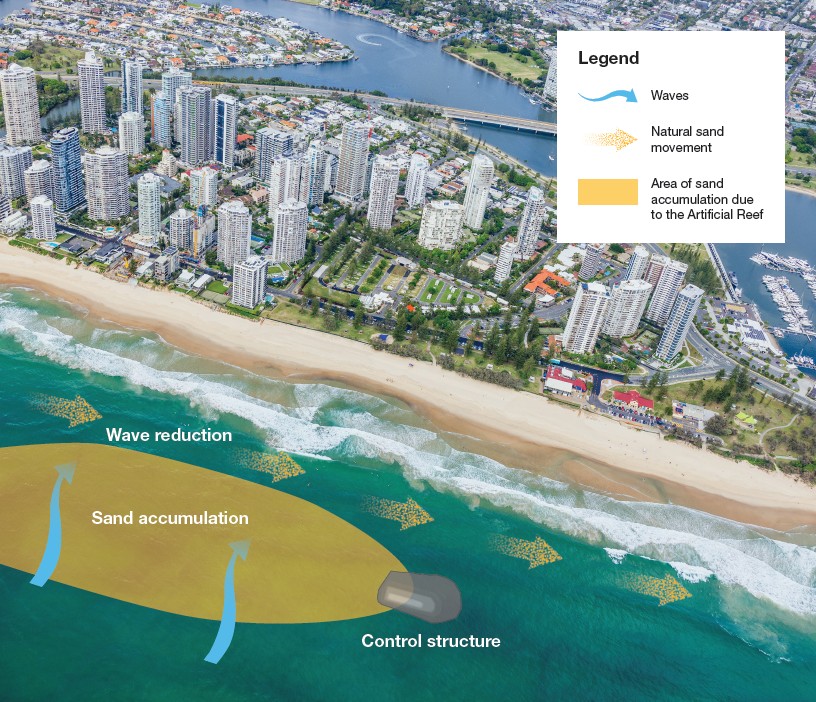
This structure is meant to cause sand accumulation to the south of it. This extra sand causes waves, especially larger waves, to break when going over that sand.
The waves that do reach the beach are smaller and there is less beach sand erosion.
Instead of adding large volumes of sand, this approach focuses on reducing how quickly sand moves away.
By slowing sand movement, the beach can build a strong buffer and recover more effectively after storms.
This has been successful elsewhere on the Gold Coast, such as at Palm Beach.
The main option being considered here is submerged reefs, which interact with waves and sand movement.
What are the benefits of this approach?
- Widens the beach and helps create an underwater sand buffer, particularly effective during large storms.
- Can improve surfing conditions and marine habitat.
- Maintains a natural beach appearance as the structure sits underwater.
- Proven locally – submerged reefs have been successful on the Gold Coast, like Palm Beach.
- Strong understanding of how they perform through experience and data.
What are the disadvantages?
- Widened beach will vary over time as sand movement is not restricted.
- Performance depends heavily on engineering design and construction.
- Can create a sand deficit to the north if not carefully managed.
Consultation has concluded.
