

Seawall Renewal
The Burleigh Heads foreshore is one of Gold Coast’s most iconic destinations, valued for its world-famous surf break, natural parklands and iconic coastal character.
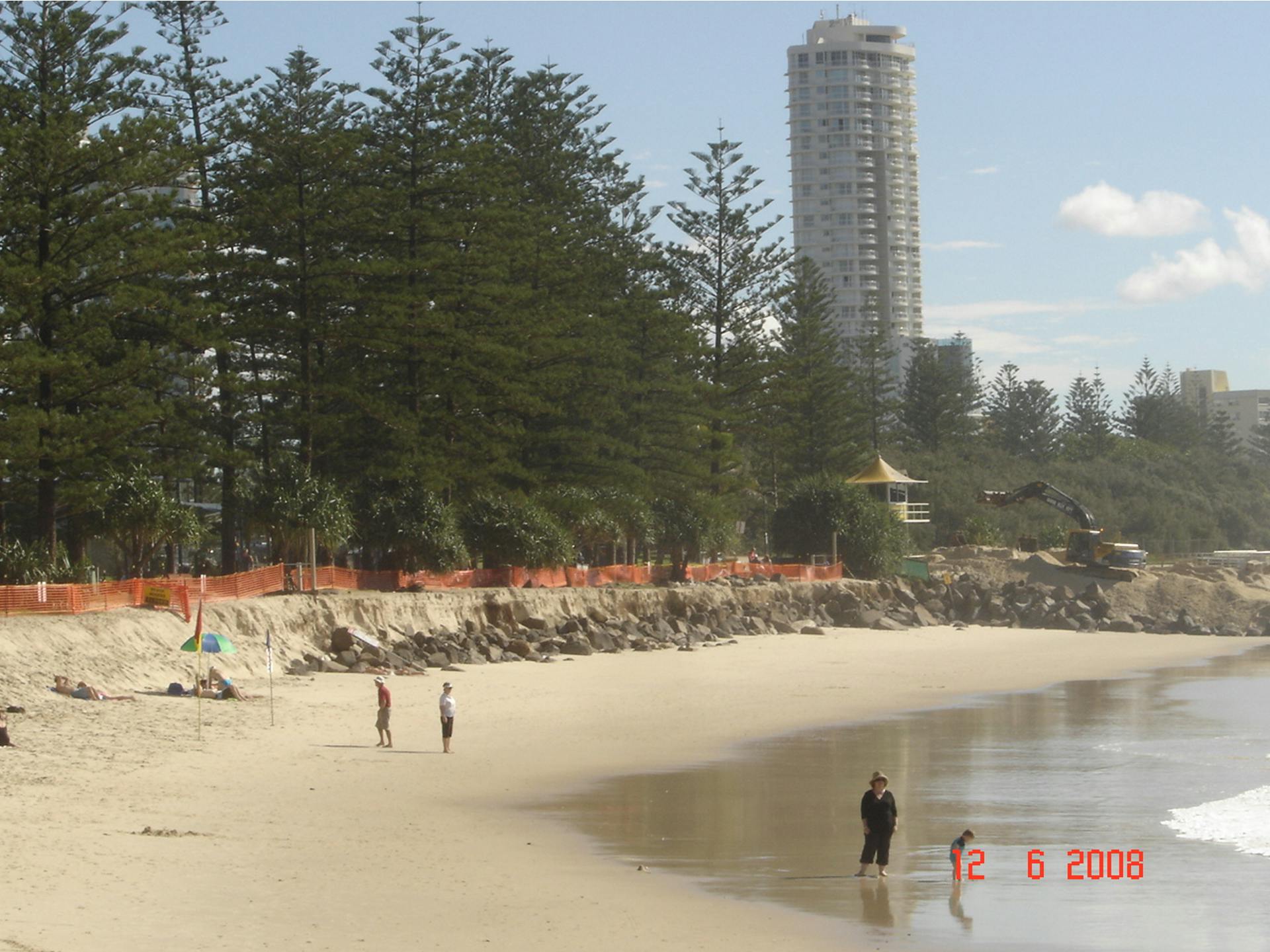
A buried seawall between Justins Park and Mowbray Park has been protecting the Burleigh Heads foreshore for 40 years. A recent investigation of this seawall has showed that a full reconstruction of the wall is required to ensure the foreshore remains protected in the future.
What is a seawall?
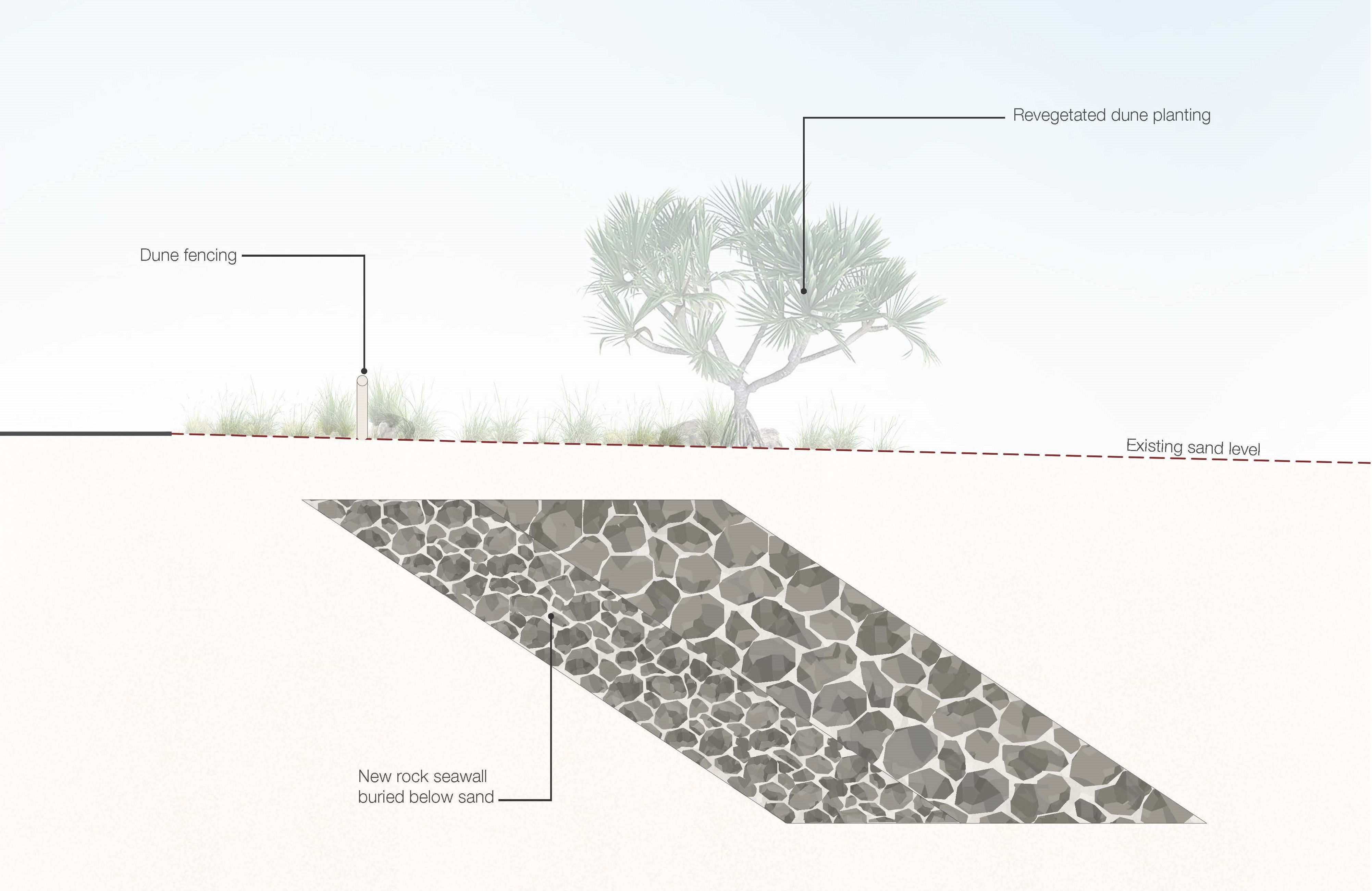
Seawalls are our last line of defence against coastal erosion and storm impacts. On the Gold Coast, they are mostly made up of large boulders buried under the sand. During normal coastal conditions at Burleigh Heads, the seawall is buried under the dunes and vegetation, and protects the foreshore and parklands against severe storm and erosion events.
The seawall at Burleigh Heads
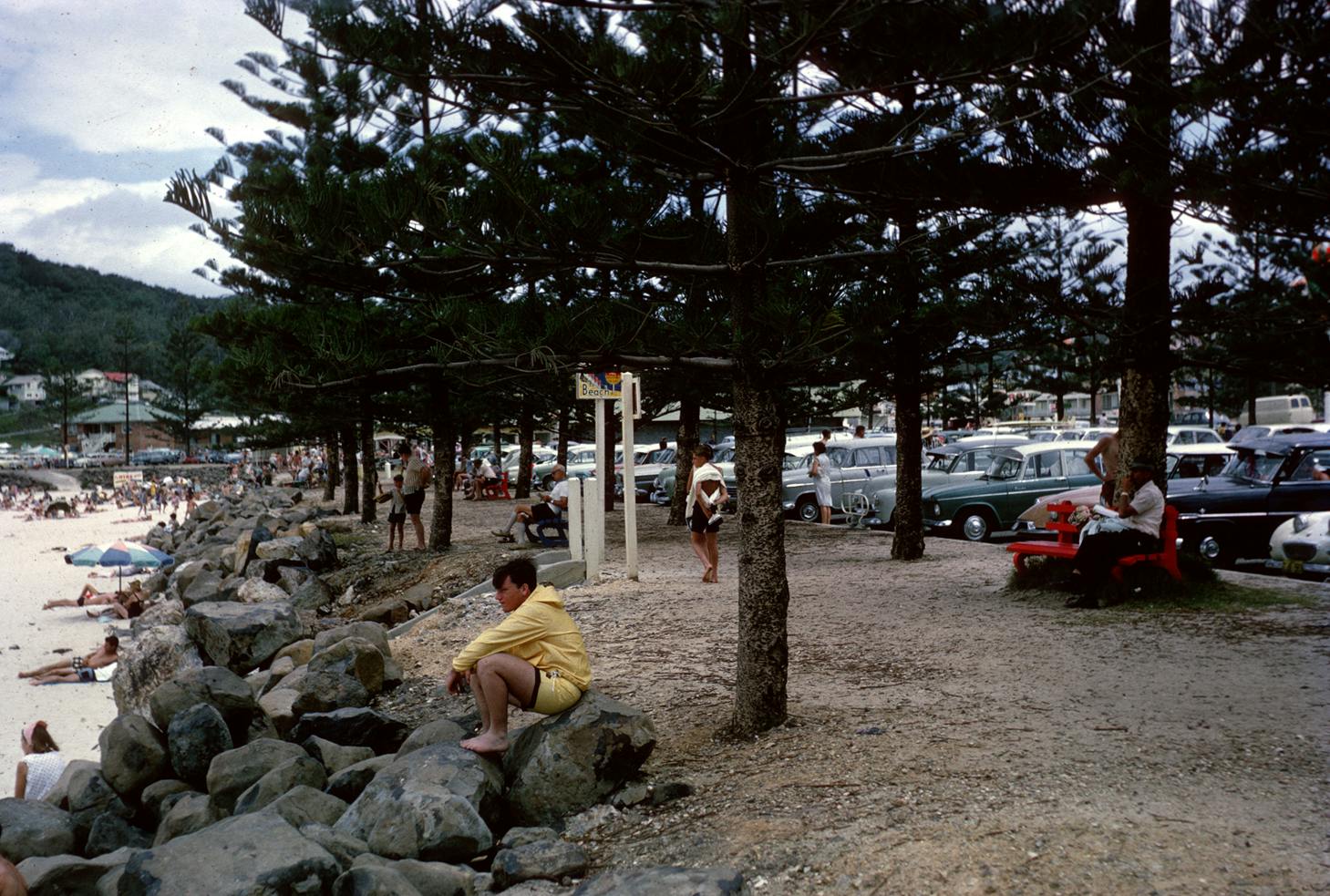
The existing seawall was constructed in the 1980’s, and an upgrade is now critical to ensure the foreshore remains safe, resilient, and vibrant for years to come. Without action, we risk serious damage to the dunes and foreshore that could lead to more extensive beach restoration works, a disruption of access to the foreshore and impacts to natural beauty of the area.
To meet these challenges, rebuilding this seawall is critical to ensure that it continues to act as a last line of defence for this much-loved foreshore.
Watch the video to see how we're protecting one of the Gold Coast's favourite foreshores:
Protecting nature and surf amenity
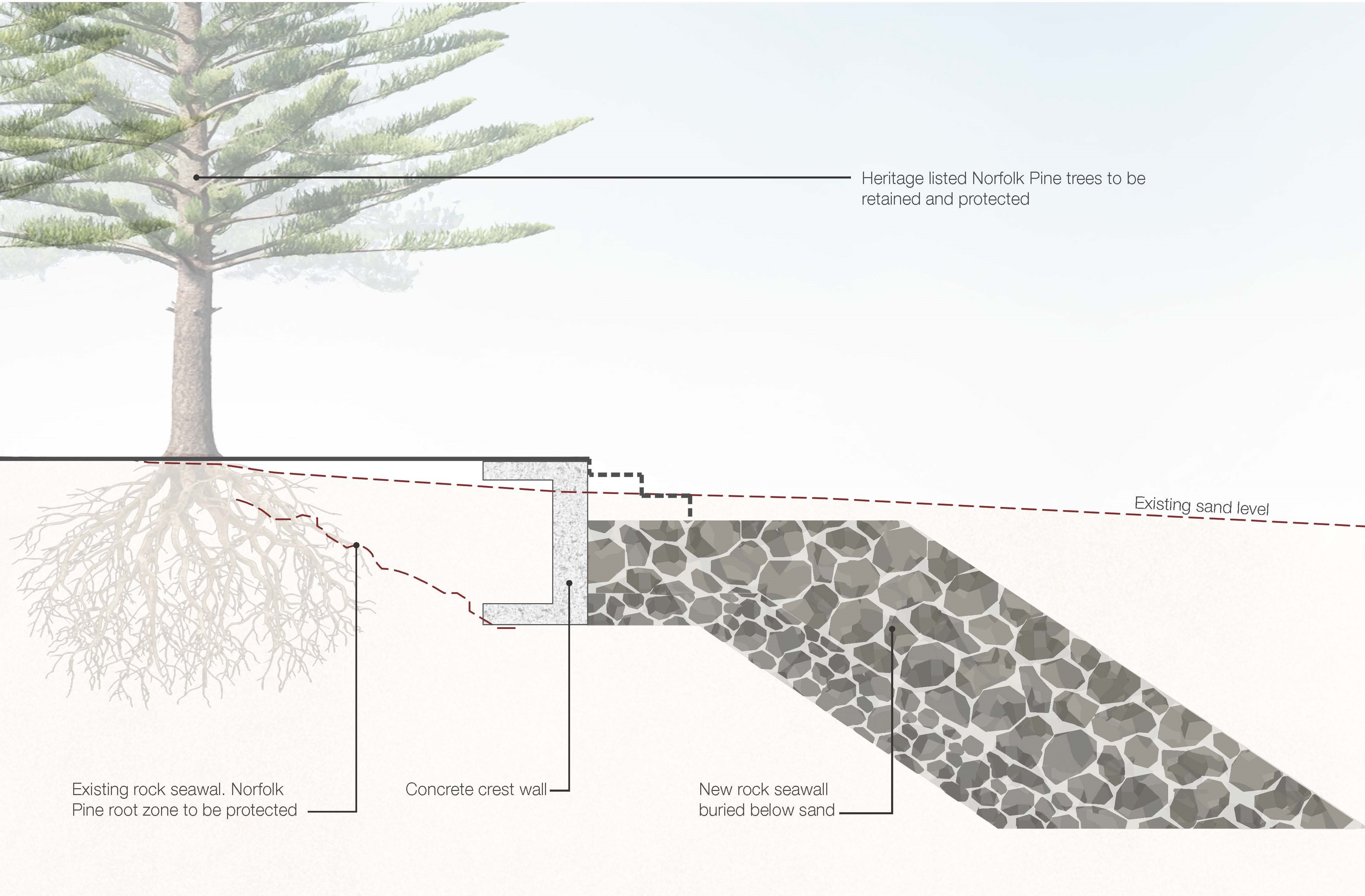
The new seawall has been carefully designed around the protected and iconic Norfolk Pines on the Burleigh Heads foreshore. A tree protection zone has been established, and specialist arborists will monitor the seawall works.
We have also ensured that the seawall won’t impact Burleigh’s globally recognised surf break. The seawall design avoids structures that could reflect wave energy or alter wave patterns, meaning we are maintaining the excellent surf amenity at Burleigh.
Images
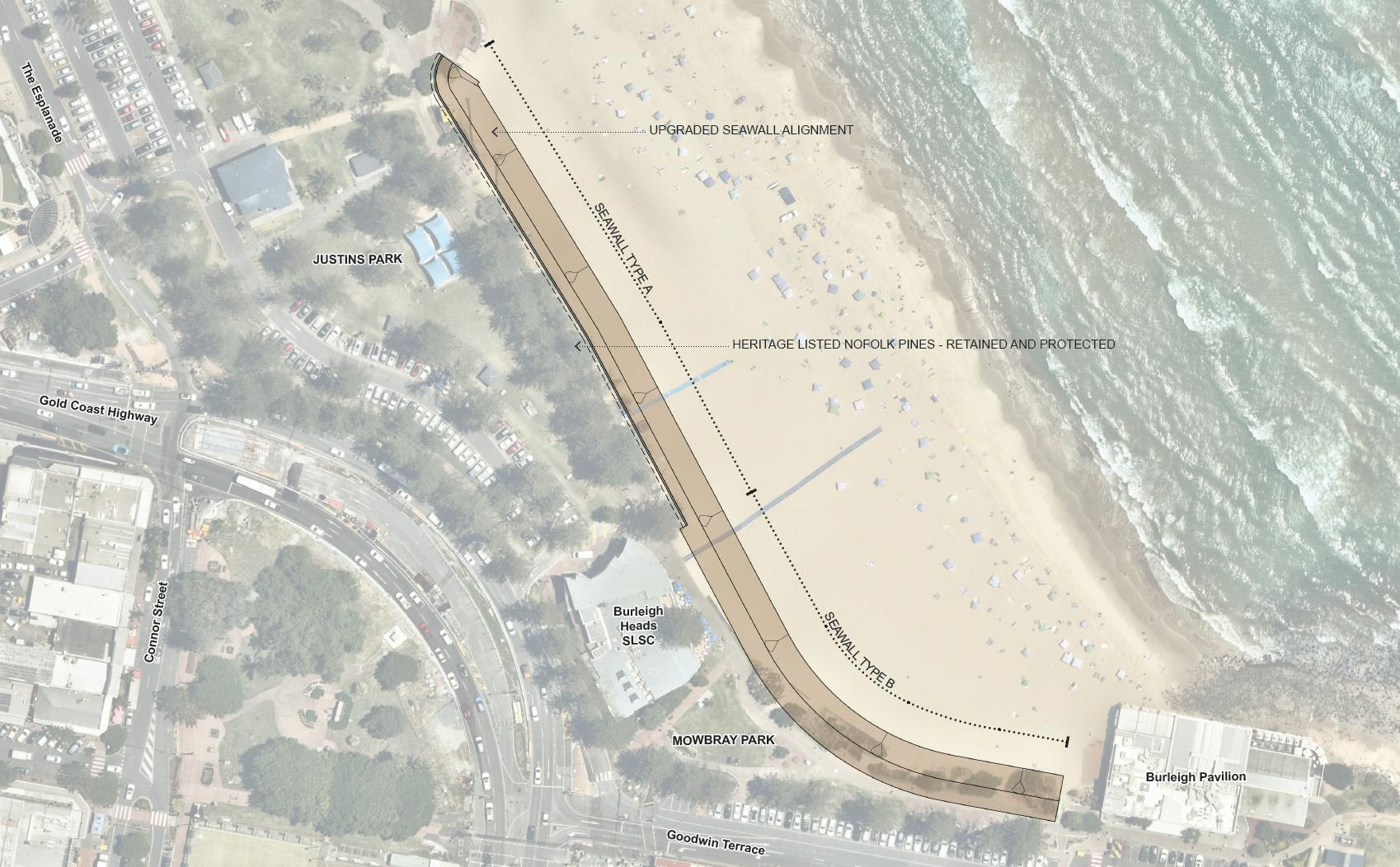
Upgraded seawall alignment
FAQs
Why do we need to rebuild the existing seawall?
While healthy, wide beaches are a substantial part of our coastal management strategy, seawalls are critical to ensuring our foreshores are protected from severe erosion events and storm surge.
Recent investigations confirmed the seawall within the Justins and Mowbray Parks areas must be rebuilt to ensure it can continue to act as a last line of defence for the Burleigh foreshore.
What will the new seawall look like?
Most of the new seawall will be buried beneath the beach and dune system, using engineered rock and geotextile layers designed to prevent erosion from storm waves. Once completed, much of it will be covered with sand.
Where will the seawall be located?
The seawall will stretch from the viewing platform at Justins Park down to Rick Shores restaurant in front of Mowbray Park. It will align with the rear of the beach close to the foreshore, in the same general area as the existing buried structure.
Due to constraints and ensuring protection of the existing Norfolk Pines, the new seawall is required to be built just in front of the existing wall.
Why are we digging up and replacing the seawall if the beach is healthy?
Seawalls are the last line of defence in a severe storm event – we don’t want to wait for a severe storm to potentially destroy the iconic Burleigh Heads foreshore. We’re acting now so the foreshore is resilient to these events in the future.
What would happen if the seawall wasn't upgraded?
If left unchanged, the ageing structure may not withstand future severe storms or the effects of a rise in sea levels. This risks:
- damage to paths, lighting, and underground services
- loss of dunes and beach width
- unsafe beach access
- high repair costs after erosion events.
Upgrading the seawall now ensures continued protection for the foreshore and infrastructure.
Why can't we just rely on the dunes?
During extreme weather events, dunes can erode rapidly, putting nearby infrastructure at risk. The seawall acts as a final line of defence, especially in events similar to ex-Tropical Cyclone Debbie (2017) and Tropical Cyclone Alfred (2025), where substantial erosion occurred along sections of the Gold Coast.
How long will rebuilding the seawall take?
Work on the new seawall is scheduled to start in 2028-29. Construction will occur in stages over several months, depending on weather and site conditions. Public safety and beach access will be maintained with temporary detours and fencing.
Will the seawall upgrade affect the protected Norfolk Pines along the foreshore?
The project has been carefully designed to protect the iconic Norfolk Island Pines. Tree protection zones will be strictly observed during construction. Specialist arborists will monitor works to avoid any damage to root systems or canopy health.
Will the seawall affect the surf break or marine life?
No. The design has been assessed by coastal engineers and will not affect the world-class surf conditions or marine life at Burleigh.
Will the beach be closed?
During construction of the new seawall, it may be required to close some access points or parts of the beach in the interest of public safety. Any such closures would be temporary and clearly signed. We have no plans to close the whole beach at any stage of construction.

Thank you for your contribution!
Help us reach out to more people in the community
Share this with family and friends